
NVIDIA Vera Rubin Explained: Inside the H300 Platform Powering 2026’s AI Boom
NVIDIA’s Vera Rubin platform is now in full production. Here’s what the six-chip architecture means for AI training, inference, and your cloud bill.


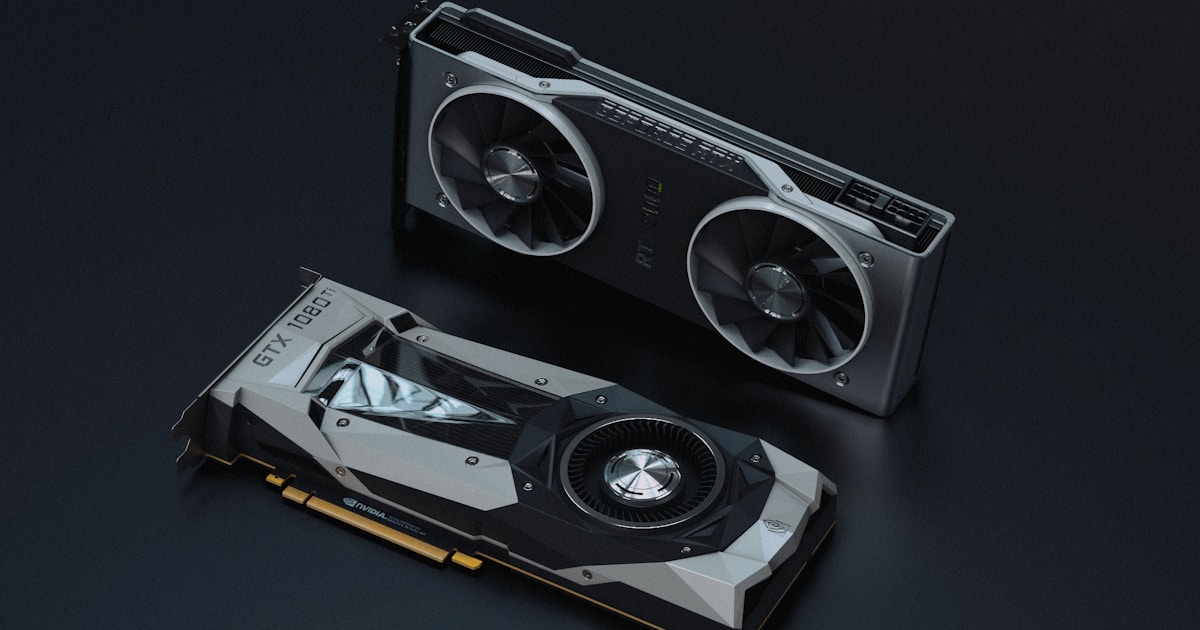
If you’ve been wondering why hyperscaler capex keeps hitting record numbers every quarter, the answer is sitting on a Taiwan Semiconductor wafer right now. NVIDIA’s Vera Rubin platform — announced at CES 2026 and now shipping in volume — isn’t just the next chip. It’s a six-chip architecture that quietly redefines what “an AI computer” means, and it’s already booked solid through 2027.
Quick Take
What it is: NVIDIA’s successor to Blackwell — six chips that work as one AI supercomputer, headlined by the H300 GPU and the new Vera CPU.
Performance: Up to 10x lower inference token cost vs. Blackwell, 4x fewer GPUs needed to train MoE models.
Availability: In full production now. AWS, Google Cloud, Microsoft Azure, OCI, CoreWeave, Lambda, Nebius, and Nscale ship Rubin instances in H2 2026.
What Exactly Is Vera Rubin?
Vera Rubin is NVIDIA’s first six-chip, extreme-codesigned AI platform. Most people see the headline (“new GPU”) and miss the bigger picture: NVIDIA isn’t shipping a chip — it’s shipping a complete server. The platform combines:
- Vera CPU — A new Arm-based host processor purpose-built to feed the H300 GPUs.
- Rubin H300 GPU — The flagship accelerator, optimized for trillion-parameter MoE training and inference.
- NVLink 6 Switch — Higher-bandwidth, lower-latency interconnect between GPUs.
- ConnectX-9 SuperNIC — A network card that does in-line collective operations.
- BlueField-4 DPU — Offloads networking, storage, and security from the CPU.
- Spectrum-6 Ethernet Switch — Datacenter-scale networking glue.
The “Vera Rubin superchip” — what most coverage refers to — pairs one Vera CPU with two Rubin H300 GPUs in a single liquid-cooled board. That’s the unit you actually order.
The Numbers That Matter
| Metric | Blackwell (B200) | Vera Rubin (H300) | Improvement |
|---|---|---|---|
| Inference token cost | Baseline | 10% of baseline | 10x lower |
| GPUs to train MoE | 100% baseline | 25% of baseline | 4x fewer |
| Memory per GPU | 192 GB HBM3e | 288 GB HBM4 | +50% |
| NVLink bandwidth | 1.8 TB/s | 3.6 TB/s | 2x |
That 10x inference token cost reduction is the line item that matters most. Inference is now bigger than training in most enterprise AI deployments — when AWS or OpenAI quotes you a token price, that price is mostly inference cost. A 10x reduction means the business case for AI assistants, agents, and RAG systems suddenly closes for use cases that were borderline a year ago.
Why “Vera Rubin”?
The platform is named after Vera Rubin, the American astronomer whose work on galaxy rotation curves provided the first robust evidence for dark matter. NVIDIA has a history of naming architectures after scientists — Hopper (Grace Hopper), Blackwell (David Blackwell) — and Rubin’s contribution to physics is the kind that fundamentally reshapes a field. Apt naming for a chip platform that’s trying to do the same to compute.
Who’s Buying It (And Who Can’t)
Jensen Huang said during the CES keynote that Rubin entered full production “well ahead of schedule.” That production capacity is already spoken for. The first wave of cloud deployments includes:
- AWS — Vera Rubin–based EC2 instances launching late 2026.
- Google Cloud — Hybrid Rubin/TPU 8T deployments for major customers.
- Microsoft Azure — Already running Rubin clusters for OpenAI workloads.
- Oracle Cloud (OCI) — Sovereign-AI deployments for regulated industries.
- NVIDIA Cloud Partners — CoreWeave, Lambda, Nebius, Nscale.
Notably absent: Chinese hyperscalers. The U.S. export-control regime continues to block top-tier NVIDIA silicon from shipping to ByteDance, Alibaba, Tencent, and Baidu. That’s the gap Huawei’s 950PR chip is trying to fill — and it’s why the AI hardware race is increasingly bifurcating along geopolitical lines.
What Rubin Means for Your AI Strategy
If you’re a developer or a CTO, here’s how to actually think about Rubin:
- Cheaper inference is coming. If the hyperscalers pass through even half of the 10x cost reduction, expect AI API prices to drop another 30-50% in the next 12 months. Plan business cases accordingly.
- Bigger models become viable. The 4x training efficiency means OpenAI, Anthropic, and Google can train trillion-parameter MoE models with the same budget that built today’s flagships. Claude Mythos 5 at 10T parameters is the first preview of where this leads.
- Latency-sensitive agents finally work. The combination of 2x NVLink bandwidth and faster HBM4 memory cuts agent step latency dramatically. Real-time voice agents, code-completion at scale, and live coding assistants all benefit.
- Edge deployment shifts. Rubin doesn’t fit in your laptop. But the architectures it enables are getting distilled into smaller models that absolutely will. Expect a wave of capable on-device AI in late 2026.
FAQ
When can I rent Vera Rubin GPUs in the cloud?
Vera Rubin instances start shipping from AWS, Google Cloud, Azure, and OCI in the second half of 2026. CoreWeave and Lambda Labs have early access already. Expect general availability across all major clouds by Q1 2027.
How is the H300 different from the B200?
The H300 has 50% more memory (288 GB HBM4 vs. 192 GB HBM3e), 2x NVLink bandwidth, and dramatically better MoE-specific performance thanks to new tensor core designs. The biggest practical difference: 10x lower cost per inference token.
What comes after Rubin?
NVIDIA has previewed “Feynman” as the next architecture, expected late 2027 or early 2028. The roadmap suggests another step-change in MoE inference efficiency, with continued focus on disaggregated CPU+GPU+DPU codesign.
Does Vera Rubin replace H100/H200 instances?
Eventually, yes — but not immediately. Cloud providers will keep H100/H200 fleets running for years; they’re still cost-effective for many workloads. New flagship deployments and frontier model training will move to Rubin first.
The Bottom Line
Vera Rubin is the platform that makes 2026’s AI ambitions financially feasible. Without a 10x inference cost reduction, “every app gets an AI agent” was a slide-deck claim. With Rubin shipping in volume, it’s a budget you can actually approve. Watch the hyperscaler pricing announcements over the next two quarters — that’s where you’ll see Rubin’s economics show up in your own bills.




Keep reading
More from the same category
Cursor AI Review 2026: Is the $20/Mo Pro Plan Worth It?
Some links in this post may earn us a small commission at no extra cost to you. We only recommend tools we...

How to Use Suno AI to Save Time in 2026 (Full Guide)
You needed a background track for your YouTube video yesterday. You spent four hours on Epidemic Sound, found nothing that fit, and...
How to Use Jasper AI to Save Time in 2026 (Full Guide)
Most content teams spend 6–10 hours producing a single blog post. Jasper AI users report cutting that to under 2 hours —...