
SpaceX Just Reserved Cursor for $60 Billion — The AI Coding Wars Have a New King
SpaceX struck a deal giving it the right to acquire AI coding startup Cursor for $60B later this year — or pay $10B for collaboration. Here's what it means for developers.


The story of how SpaceX reserved Cursor 60 billion rights has become the most talked-about deal in AI. Elon Musk just made the boldest play yet in the AI coding wars — and it has nothing to do with rockets. SpaceX has secured the right to buy Cursor, the fastest-growing developer tool on the planet, for a jaw-dropping $60 billion later this year. If SpaceX walks away, it still has to write a $10 billion check for “the work we’re doing together.” Either way, this is the most expensive option contract in tech history, and it just rewrote the rules for every AI coding startup in the market.
The Deal That Stopped a Funding Round Cold
Here’s where things get wild. According to TechCrunch’s reporting on April 22, Anysphere — the parent company behind Cursor — was midway through raising a $2 billion round at a roughly $30 billion valuation when SpaceX swooped in with the buyout offer. The fundraise got preempted. Investors who had been jockeying for allocation suddenly found themselves staring at a much bigger deal: SpaceX gets exclusive rights to acquire the entire company at a $60 billion floor, or pays $10 billion to walk away from a deeper collaboration agreement.
To put that in perspective: Cursor reportedly hit $1 billion in annual recurring revenue in November 2025 and has continued growing through early 2026. That’s a pace that outruns Slack, Zoom, and Snowflake at the same stage — which is why the price tag, while shocking, isn’t completely unhinged. When SpaceX reserved Cursor 60 billion acquisition rights, it was paying for the next decade of compounding, not last year’s revenue.
Why SpaceX Reserved Cursor 60 Billion Rights for an AI Coding Tool
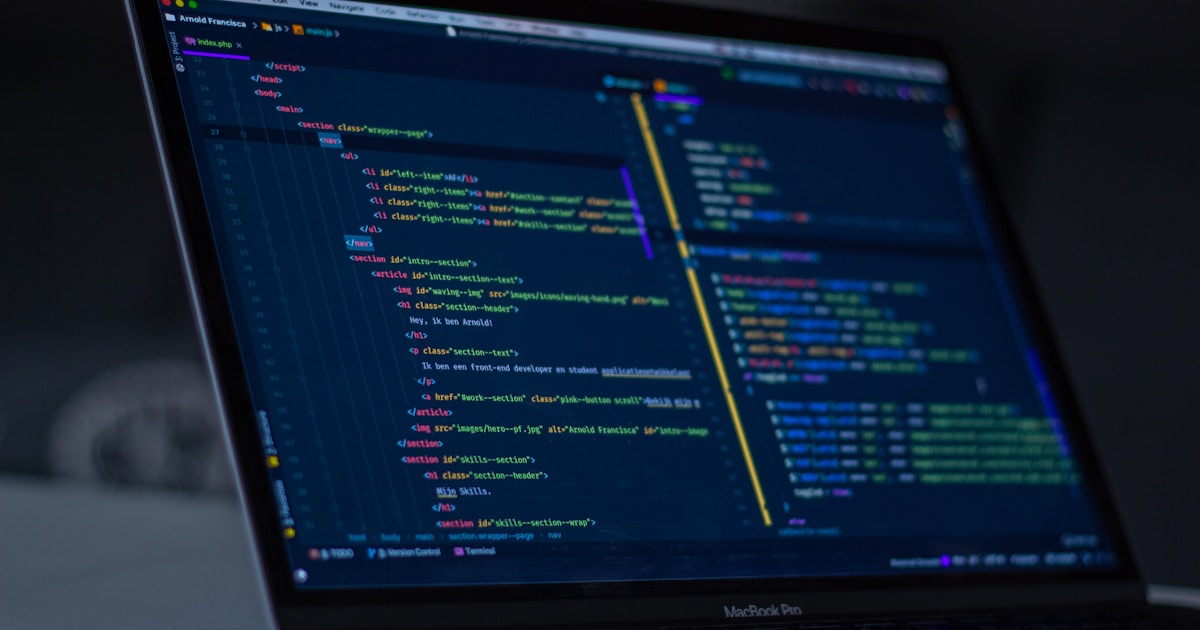
Read the headline cold and it sounds absurd. A rocket company buying a coding IDE? But peel back the layers and the strategic logic becomes obvious. Musk has been moving SpaceX toward a vertically integrated AI stack for the better part of a year — first absorbing xAI in a $250 billion mega-merger in February, and now lining up Cursor as the developer-tooling layer that sits on top of it.
Here’s the thing though: SpaceX is preparing for the largest IPO in tech history later this summer. By holding an option rather than executing the acquisition outright, Musk avoids re-filing confidential financial documents and keeps the listing on track. After the IPO, SpaceX can use newly issued public stock to finance the $60 billion buyout — far cheaper than burning private capital. It’s an elegant piece of financial engineering disguised as a partnership announcement.
What Cursor Actually Does (And Why It’s Worth $60B)
If you’ve been writing code in 2026, you’ve almost certainly tried Cursor. It’s the AI-native IDE that took everything VS Code does well, layered Claude and GPT-5 on top, and added something neither GitHub Copilot nor Windsurf has matched at the same depth: agentic coding workflows that can plan, edit across files, run terminals, and ship pull requests with minimal supervision.
The Cursor 3 release earlier this year was the inflection point. Engineers who used to babysit autocomplete suggestions started letting the agent handle entire features. We dug into the workflow shifts in our full Cursor 3 review — the short version is that the productivity gains are real and they compound for senior developers, not just juniors. And in our head-to-head comparison of Cursor vs Windsurf vs Copilot vs Claude Code, Cursor came out on top for developers who want a single tool that handles everything from quick fixes to multi-file refactors.
The Compute Crunch Behind the Deal
Want the real story behind the SpaceX reserved Cursor 60 billion valuation? It’s compute. Cursor’s growth has been throttled by GPU access, not demand. Every prompt that runs through the IDE consumes inference cycles, and every new feature — from multi-step agents to repository-wide reasoning — multiplies that load. SpaceX, by contrast, has spent the last eight months building out one of the largest private compute fleets on Earth, with ambitions to extend it into orbit via Starlink-connected data centers.
Pair Cursor’s user base with SpaceX’s compute and Grok’s models, and you get something competitors can’t easily replicate: an end-to-end stack from chip to keystroke. That’s the bet. Whether it pays off depends on whether developers actually want their IDE owned by a Musk company.
What Happens to Cursor Users?
Honestly? Probably nothing in the short term. The team behind Cursor — founders Sualeh Asif, Arvid Lunnemark, Aman Sanger, and Michael Truell — is still running the company independently while the option sits on the table. SpaceX hasn’t signaled any product changes. The pricing tiers haven’t moved. The model lineup still includes Claude Sonnet 4.6, GPT-5.4, and Gemini 3.1 Pro alongside whatever Anysphere is fine-tuning internally.
But longer term, things get interesting. If SpaceX exercises the option, expect tighter integration with Grok models — Musk has been vocal about wanting Grok to be the default coding assistant for “his” companies. There’s also a real question about whether Cursor would maintain neutrality across model providers or quietly tilt toward xAI infrastructure. Developers who picked Cursor specifically because it gave them access to Claude and GPT might find that calculus changing.
The Ripple Effect Across AI Coding Tools
This deal didn’t just reset Cursor’s valuation. It reset the entire category. Windsurf, Replit, Cline, and Aider are now all looking at a market where their biggest competitor has a trillion-dollar parent company waiting in the wings. GitHub Copilot, owned by Microsoft, suddenly looks more like the establishment incumbent than the obvious leader.
Expect three things in the next 90 days:
- Aggressive M&A from Big Tech. Google, Amazon, and Meta have all been shopping for coding-tool acquisitions. The SpaceX reserved Cursor 60 billion bid just gave every target a new reservation price.
- Pricing pressure on the mid-market. Cursor’s competitors will need to differentiate hard or lower prices to keep developers from defaulting to the assumed market leader.
- Renewed open-source momentum. When the dominant tool gets locked into a single corporate parent, developers historically rally around alternatives. Watch projects like Aider and OpenHands for an inflow of attention.
Should You Switch Tools Right Now?
Short answer: no. Don’t make a tool decision based on a corporate option contract that hasn’t even been exercised yet. If Cursor is the best AI coding tool for your workflow today — and for most developers it still is — keep using it. The earliest meaningful product changes wouldn’t show up until late 2026 at the earliest, and even then any pivot would happen gradually.
What I’d do instead: keep one alternative installed and lightly tested. Claude Code makes a strong backup if you live in Anthropic’s ecosystem. Windsurf is a clean fit for teams who want a polished VS Code fork with strong agent capabilities. Our Cursor vs Claude Code vs Copilot breakdown walks through the trade-offs in detail — useful reading if you want a hedge.
The Bigger Picture: AI Is Eating Vertical Integration
Step back from the headline and what you’re really looking at is the third major vertical-integration play in AI in under twelve months. First Amazon poured another $25 billion into Anthropic. Then Google committed $40 billion to Anthropic on top of its existing stake. Now SpaceX has effectively reserved Cursor for itself at a $60 billion strike price.
The pattern is unmistakable. Every hyperscaler and AI hopeful has decided that owning the model isn’t enough — you need the developer surface, the compute, and the workflow tools all under one roof. The era of best-of-breed AI tools chosen freely by developers is quietly being replaced by an era of curated stacks pushed by trillion-dollar incumbents.
FAQ
Has SpaceX actually bought Cursor?
No. SpaceX has secured an option to acquire Cursor for $60 billion later in 2026. If SpaceX chooses not to exercise that option, it must pay Anysphere $10 billion for the ongoing collaboration. The actual acquisition has not closed.
What is Cursor and who owns it today?
Cursor is an AI-powered code editor built on top of VS Code. It’s developed by Anysphere, a San Francisco startup founded in 2022 by four MIT graduates. Anysphere remains an independent company until or unless SpaceX exercises its option.
Will Cursor pricing change because of the SpaceX deal?
Not in the short term. Anysphere has not announced any pricing changes tied to the SpaceX agreement. Long-term pricing depends on whether the option is exercised and how SpaceX integrates Cursor into its broader AI stack.
Why is SpaceX involved in AI coding tools?
SpaceX absorbed xAI in February 2026 and has been building a vertically integrated AI stack ahead of its planned IPO. Adding a developer surface like Cursor extends that stack from chips and models all the way to the IDE — giving SpaceX a complete pipeline from infrastructure to end user.
What’s the best alternative to Cursor in 2026?
The closest alternatives are Claude Code (best for Anthropic-native workflows), Windsurf (clean VS Code fork with strong agent features), and GitHub Copilot (best for teams already on GitHub). Choice depends on your model preferences and existing toolchain.


Keep reading
More from the same category
Cursor AI Review 2026: Is the $20/Mo Pro Plan Worth It?
Some links in this post may earn us a small commission at no extra cost to you. We only recommend tools we...

How to Use Suno AI to Save Time in 2026 (Full Guide)
You needed a background track for your YouTube video yesterday. You spent four hours on Epidemic Sound, found nothing that fit, and...
How to Use Jasper AI to Save Time in 2026 (Full Guide)
Most content teams spend 6–10 hours producing a single blog post. Jasper AI users report cutting that to under 2 hours —...